
Scripture reading – 2 Corinthians 4:7–8
Charlie A. Dayon
Sermon last July 27, 2025 at the LVMBC, Carmen, Davao del Norte, Philippines
In times of suffering, uncertainty, and deep personal struggle, many of us begin to question our worth and capacity. We wonder if we are too broken to be used by God or too weak to endure the demands of life. Yet, in the heart of the Apostle Paul’s second letter to the Corinthians, we find a profound truth that challenges this perspective: our weakness is not a hindrance to God’s work—it is the very means by which His power is made visible.
Paul writes, “But we have this treasure in jars of clay, to show that the surpassing power belongs to God and not to us. We are afflicted in every way, but not crushed; perplexed, but not driven to despair” (2 Corinthians 4:7–8, ESV). In these two verses, Paul offers a radical view of human weakness and divine strength, one that continues to resonate deeply with believers today.
Paul begins by speaking of a treasure. This treasure is not material wealth or worldly success, but the gospel—the knowledge of the glory of God revealed in the face of Jesus Christ. It is the message of salvation, the life and light of Christ, that brings hope to a dark world. In Paul’s eyes, this treasure is of immeasurable value. It transforms lives, offers forgiveness, and reveals the very character of God.
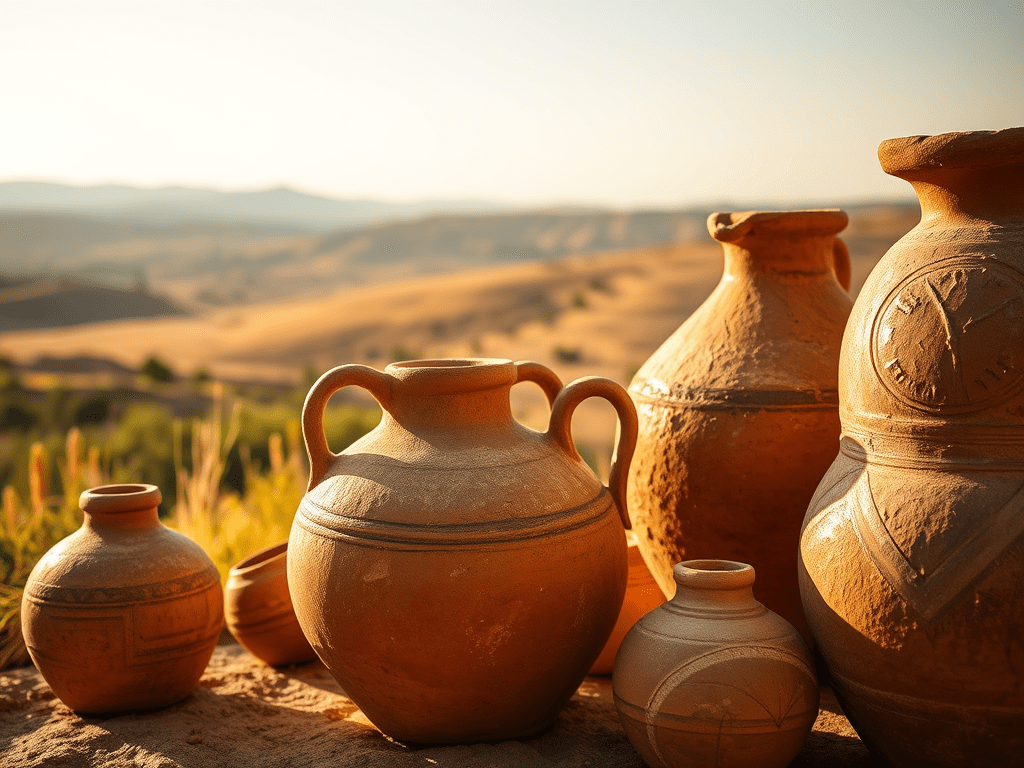
Nonetheless, where is this treasure placed? Not in vessels of gold or silver, but in jars of clay—common, fragile containers. These jars were used in everyday life in the ancient world, valued not for their strength or beauty, but for their utility. They were ordinary and easily broken. Paul uses this imagery to describe human beings—ordinary, vulnerable, and flawed.
Why would God choose to put something so precious in something so fragile? Paul gives us the answer: “to show that the surpassing power belongs to God and not to us.” The weakness of the vessel draws attention to the strength of what it contains. If the vessel were impressive, people might glorify the container rather than the treasure. But when God’s power is revealed through weak and broken people, it becomes unmistakably clear that the glory belongs to Him.
This paradox continues in verse 8, where Paul describes the life of a believer as marked by hardship, yet upheld by hope. He says, “We are afflicted in every way, but not crushed; perplexed, but not driven to despair.” Life can be overwhelming, pressing on us from all sides—physically, emotionally, and spiritually. But Paul insists that even in the most difficult circumstances, we are not destroyed. We are not without hope.
Being afflicted but not crushed speaks to the resilience that comes not from our strength, but from the power of God within us. Being perplexed but not in despair reminds us that even when we lack clarity or direction, we are not left to our own devices. Paul himself knew what it was like to face uncertainty. Yet, the presence of Christ within him kept him from falling into hopelessness.
These verses invite us to reframe our understanding of weakness. In a culture that often glorifies strength, success, and self-sufficiency, the idea that weakness could be a strength feels counterintuitive. But Scripture consistently shows us that God chooses the weak to confound the strong, and that His power is most clearly seen not in our abilities, but in our dependence on Him.
What does this mean for us today?
First, it means that our weaknesses—our limitations, failures, and struggles—do not disqualify us from being used by God. On the contrary, they are the very places where His grace is most evident. Our lives may be filled with cracks, but those cracks allow the light of Christ to shine through. We don’t have to pretend to be perfect. Instead, we are invited to be honest about our need for God, trusting that He is strong where we are weak.
Second, it means that suffering is not a sign of God’s absence, but often a stage for His power. When we walk through difficult seasons and continue to cling to faith, the world sees that our hope is anchored in something deeper than our circumstances. God’s strength sustains us when our own strength fails.
Finally, these verses remind us to live with humility and confidence. Humility, because we know that the treasure we carry is not of our own making. Confidence, because we know that God’s power is at work within us, even when we feel most fragile.
In the end, we are jars of clay—easily broken, often flawed, but chosen to carry the most valuable message the world has ever known. And that is no accident. It is by design, so that all the glory points to the One who dwells within us.
So, when we find ourselves afflicted – let us remember that we are not crushed. When we are confused, we should remind ourselves that we are not without hope. We carry the treasure of Christ within us, and His power is more than enough.
“The light shines in the darkness, and the darkness has not overcome it.” – John 1:5

Leave a comment